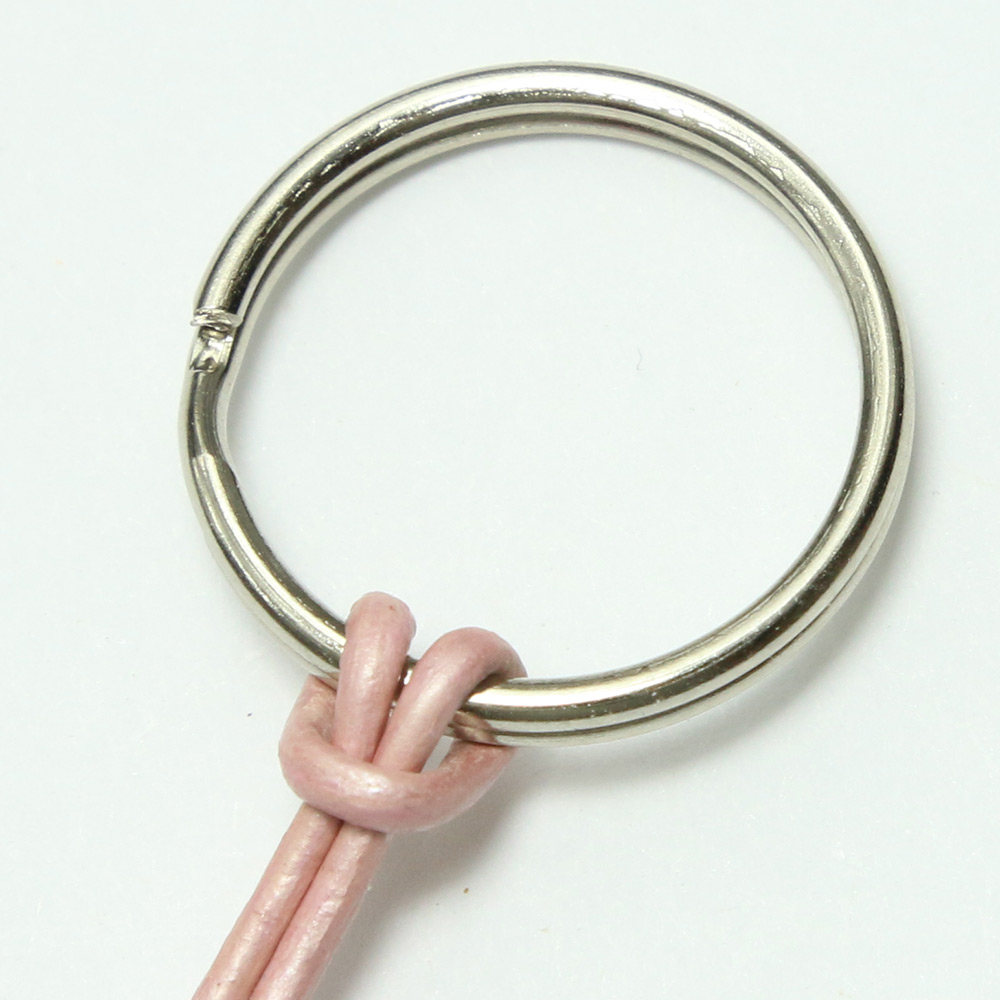
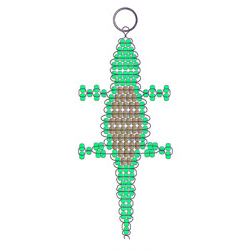
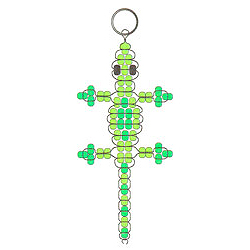
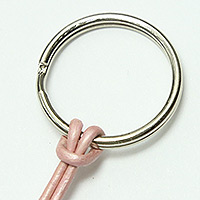
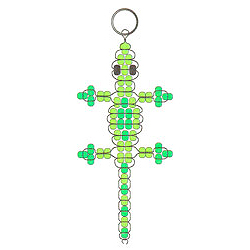
 1. Locate the halfway point of your cord or lacing and fold it in half. Attach the folded cord to your key ring using a lark's head knot as shown in the photo, so that you have two cords of about the same length hanging from the key ring.
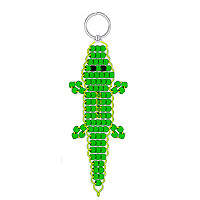
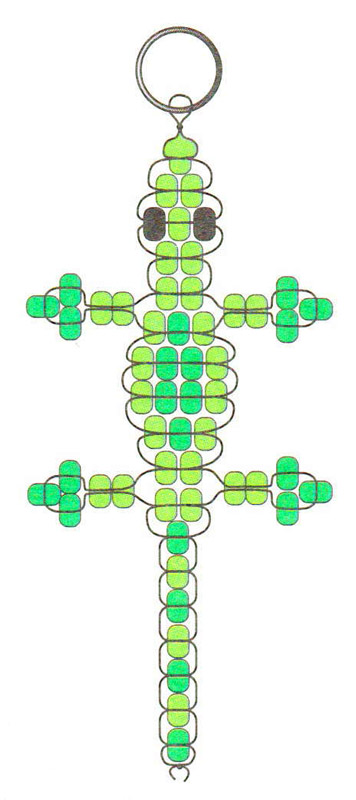
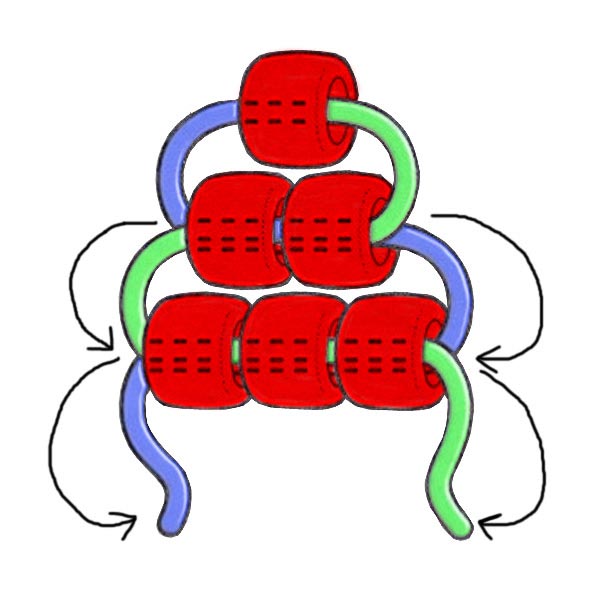 2. String the beads for the first row onto one cord. Take the other cord and pass it back through those same beads from the opposite direction. Pull both cords until the beads meet in the middle. Continue weaving one row at a time, following the colors and number of beads shown in the gecko pattern. Each new row should sit against the previous one.
3. To make one of the legs, thread on 2 beads of your main color followed by 3 beads of your second color. Thread the same cord back through the first 2 main color beads. Repeat for the other leg.
4. Continue weaving the body, following the rows in the pattern. When you reach the back legs, make them the same way as the front legs. Then continue following the diagram to complete the tail.
Note: The tension of your cord does make a difference. The rows should sit snugly together without being pulled so tightly that your lizard begins to curl or twist. If a row doesn't sit straight, loosen it, straighten the beads with your fingers and pull the slack out again.
5. After the last row, tie the cord ends together with a secure double knot or surgeon's knot. Apply a small drop of glue to the knot to keep it from coming untied during use. Allow the glue to dry, then trim away the excess cord.
The diagram below uses black lines to show the paths of the two ends of the cord. Click the diagram to open a larger version whenever you need a closer look.
Seed beads or E-beads can be used in place of pony beads to make smaller geckos and lizards. A finer stringing material, such as 28-gauge wire, can be used with the smaller beads.
Geckos, Good Luck, and Crafting Traditions
Did you know that geckos have a special place in folklore around the world? In parts of Southeast Asia, geckos are associated with good fortune, and having one living around the house is sometimes considered a lucky sign. In some traditions, they're also associated with protection and keeping a watchful eye over the home.
With their big eyes, tiny toes, long tails, and curious expressions, geckos have a look that's easy to recognize and fun to recreate. That's one reason they make such appealing subjects for crafts. You'll find geckos made from beads, painted on rocks, stitched into embroidery, and worked into jewelry, ornaments, and decorations.
Geckos are especially suited to pony bead projects. Their long bodies, four little legs, and tapering tails translate nicely into rows of beads. Even with a simple pattern, the finished critter has a recognizable shape and plenty of personality.
And then there's the good-luck connection! A handmade gecko can be more than just a colorful keychain. It can be a little good-luck charm for a friend, a thoughtful gift for someone starting a new adventure, or simply a cheerful companion to carry along every day.




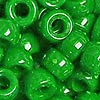 22 - Green Pony Beads
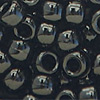 2 - Black Pony Beads
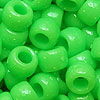 31 - Lime Green Pony Beads